
אטמוספרות כידוע, אינן דבר אחיד, ומה שיצור אחד רגיל לנשום בפלנטת הבית שלו, עשוי להיות קטלני לאורח שירצה לבוא לבקר אותו. למעשה, באף אחת מהפלנטות המוכרות למין האדמי על כדור הארץ, אין הרכב אטמוספרי זהה להרכב המוכר לנו, וכל נחיתה בלתי זהירה על כוכב לכת אחר עשויה להיות קטלנית מסיבה זו, גם אם פתרנו מראש את בעיות הטמפרטורה והכובד המקומיות. והסכנה כפולה: גם למערכת הנשימה, גם לעור.
בפלאנט N חשבו פעם על פתרון גלובלי: 'גז נשים לכולם', בו תכננו למלא את האטמוספרה של פלאנט N ושל פלנטות נוספות ששימשו מוקדי מפגש של מינים מפלנטות שונות. אך תוכנית זו הייתה יומרנית מדי אפילו בשביל פדרציית פלאנט N, שלא הצליחה לפתח תערובת גז שתהיה ראויה לנשימה ובלתי מזיקה לעור עבור כל המינים כאחד. עדיין נזקקו רוב המגיעים לפלנטה שאינה הבית שלהם לחליפות לחץ כבדות או למבנים בועתיים המצריכים הנעה ממקום למקום, מהסוג שרואים למשל בפרויקט הייל מרי.
עד שהגיעה הבועה האלסטית.
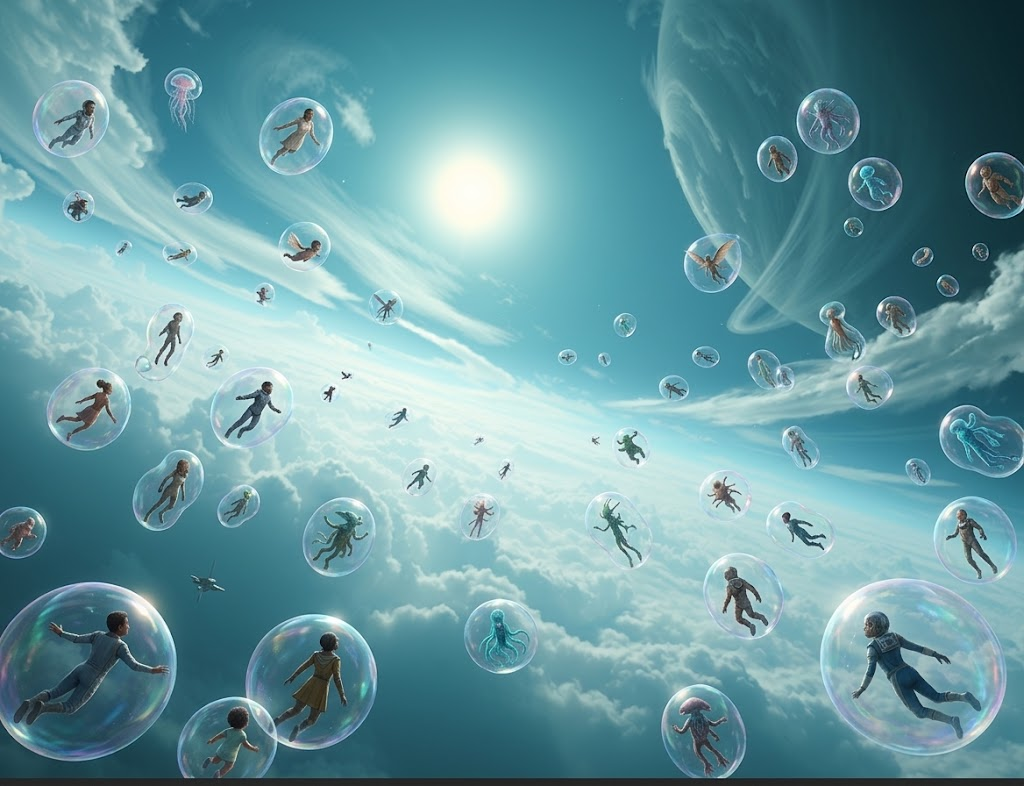
הבועה האלסטית היא מעטפת חכמה המותאמת אישית ללובש אותה. היא נכרכת בצמוד לגוף מכף רגל ועד ראש, לומדת את ההרכב האטמוספרי שהנוסע זקוק לו, וברגע היציאה לסביבה הבלתי מוגנת היא שומרת על מחזור הנשימה המקורי שלו תוך סינון וזיקוק האטמוספרה החיצונית. הבועה בלתי נראית, אינה מגבילה את התנועה, וברגע שהיא מזהה חזרה לאטמוספרת המקור (בחלונית, בבית או בחללית) – היא מתכלה מעצמה, וזה הזמן להתחדש בחדשה. אין להסיר אותה קודם!
אלא שלצד היתרונות, קיים חיסרון מרכזי: במציאות החפאית, הבועה האלסטית יקרה להחריד.
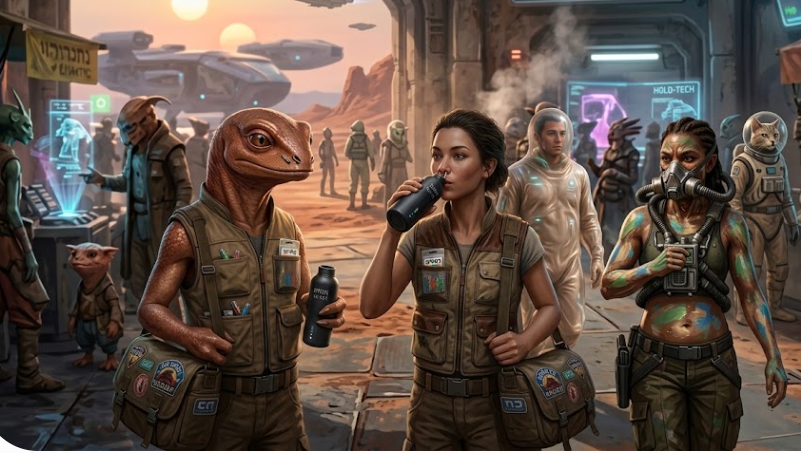
משום כך, רוב הנוסעים מתבססים עד היום על מזקק האטמוספרות המסורתי והישן – זה ששימש את חפא, חבריו, וגם את סטולי הגנוב, שנאלץ במהלך נסיעתו עם חפא לרכוש כמה יחידות שלו בתחנות המעבר השונות. כתבתי על כך גם בסיפורי ההיסטוריה האלטרנטיבית. המזקק הוא צינור קטן ומציק המחובר למערכת הנשימה ולמכשיר סינון זעיר.
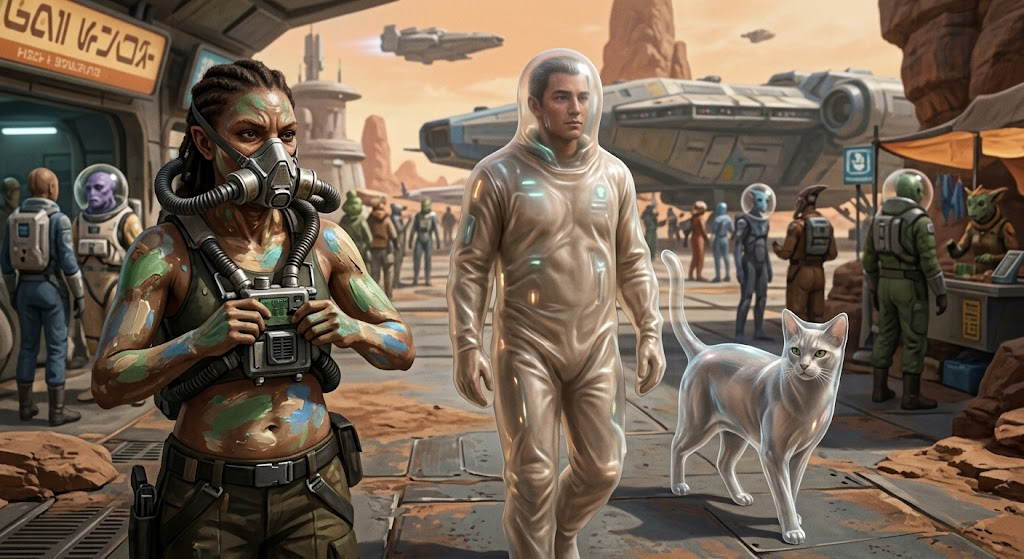
חפא סיפר לי שבמקור, המסננים הראשונים פותחו על ידי הצבאות הפדרטיביים עבור חייליהם שהיו הראשונים ליציאות המוניות לחלל, למסעות כיבוש בין-פלנטריים. וכאן נמצא מי ששאל, אם החיילים בשלב זה כבר לא הוחלפו ברובוטים, תשובתו של חפא הייתה: "לגמרי לא". יחד עם זאת, הוא רמז כי יש כאלה שעברו שינוי בתבנית הגוף (דוגמת לינדיגרא המוגברת), כך שמזקק האטמוספרות הפך לרכיב מובנה (built-in) בגופם, או שהם כבר לא נזקקו לו כלל.
רק בשלב מאוחר יותר, כשהחל עידן התיירות הבין-כוכבית, הגיע המזקק לייצור המוני אזרחי.
ועכשיו נשארת השאלה, באותה מציאות בה קשה להשיג בועות אלסטיות לכל, מה קורה לעור – אותו חלק שלא בא במגע עם הגז דרך כלי הנשימה – בנחיתה על עולמות זרים? אטמוספרה זרה עלולה לגרום לכוויות, לנגעים ואף למחלות עור קשות. והתשובה לכך מוכרת לנו היטב מכדור הארץ: Wear sunscreen!
קרמים דוחי-אטמוספרה הפכו לאחד מענפי הפיתוח המובילים בספרה הפדרטיבית (שניים רק למזקקי האטמוספרות עצמם). לכל גוף מותאם הרכב קרמים ייחודי, וכל נוסע מחויב למרוח את עצמו מכף רגל ועד ראש במספר סוגי משחות לפני כל מעבר למישור אחר. סטולי סיפר לי על עמדות המכר האינסופיות לקרמים שראה בכל תחנה שבה עבר עם חפא. הוא אף ציין שעוד נשארו אצלו בבית כמה 'שפופרות' ריקות למזכרת (את המזקק עצמו מיהר להשליך מיד כשהגיע לטאבה). אבל הוא אף פעם לא הזמין אותי אל ביתו.
Breath Adapters and Elastic Bubbles
Atmospheres, as is well known, are not uniform. What one creature is accustomed to breathing on its home planet can prove fatal to a visiting guest. In fact, on none of the planets known to humanity on Earth is the atmospheric composition identical to the one we know. Any careless landing on another planet could prove deadly for this reason—even if local temperature and gravity challenges have been overcome. The danger threatens both the respiratory system and the skin.
At Planet N, they once considered a global solution: "breathable gas for everyone," planning to fill the atmosphere of Planet N and other planets serving as central hubs for different species. However, this plan proved overly ambitious even for the Planet N Federation, which failed to develop a gas mixture that was truly breathable and harmless to the skin for all species alike. Most travelers still required heavy pressure suits or bulky bubble structures requiring powered locomotion, of the sort seen in Project Hail Mary.
Then came the elastic bubble – a personalized bubble fitted to the individual's body. Wrapped tightly around the traveler from head to toe, it learns the atmospheric composition the body breathes. The moment the traveler leaves their safe environment, it preserves their respiratory cycle while filtering or refining any external atmosphere to match their system. The bubble cannot be removed; it biodegrades the moment it detects an outside atmosphere identical to the original – typically when the traveler returns home or to their spaceship—signaling it is time for a new one. The advantage is that the bubble causes no interference, hence the name "elastic." Over time, it was designed to be invisible and unrestricted, allowing the traveler to move freely without feeling it at all.
The downside: in Chapa's reality, the elastic bubble is far more expensive than the old, traditional atmospheric refiner/breathing adapter worn by Chapa and his friends. Stoli the Stolen was forced to purchase several units at various transit stations during his journey with Chapa. I also described such atmospheric refiners in my alternative history stories. The atmospheric refiner is a small, somewhat burdensome tube fitted to the respiratory system, connected to a tiny device that filters hostile gases wherever the traveler goes, generating a breathable gas mixture.
Chapa told me that the Federative militaries initially developed the first filters for their soldiers, who were the first to venture en masse beyond their home worlds to conquer new ones. When asked if soldiers had not already been replaced by robots by that point, Chapa replied, "Not at all." However, he hinted that some had their physical structures altered — such as enhanced Lindigra — making the atmospheric refiner a fully built-in feature of their bodies, or eliminating the need for it entirely. Only later, as non-military beings began traveling into space – primarily for tourism – did mass production of these refiners become possible.
Now the question remains: in a reality where elastic bubbles are hard to come by, what happens to the skin – the part not in contact with the gas through the respiratory apparatus – upon landing on alien worlds? Foreign atmospheres can cause skin burns, leave marks, or even induce cancers.
The answer is familiar to us from Earth: Wear sunscreen! Atmosphere-repellent creams are a leading branch of development in the sphere of the Federative worlds (The leading sector: the atmospheric refiners themselves). Great effort is made to tailor personal protective creams for every body type, and every traveler, before setting out or embarking on a ship or transport to another plane, must slather themselves from head to toe in several types of cream depending on the region. Stoli also told me about the numerous stalls selling creams at every station he reached while traveling with Chapa, adding that he still kept a few empty tubes at home (having thrown his atmospheric refiner away immediately upon reaching Taba). But he never invited me to his house.


תגובה אחת על “מתאמי נשימה ובועות אלסטיות”