
When we visited Tzvi during the shiva for his mother, it was a few days before Erev Pesach 2007. Among other things, we talked abou't Planet N — the series we were hooked on in the 1970s, received through “The stolen” Stoli’s special antennas. It felt as though only we could see it — even before and at the same time as Chapa arrived.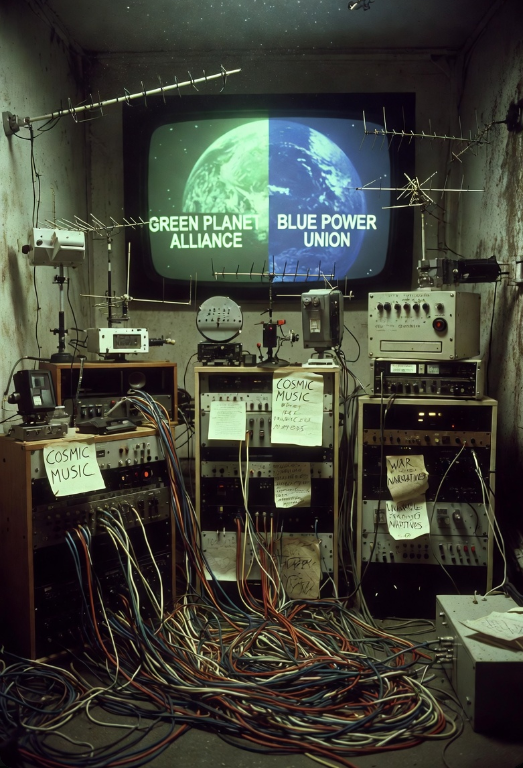
It’s strange to think about it today: back then, in real time, we almost never spoke with Chapa about that series. To this day I’m not exactly sure why.
We were sitting in Tzvi’s room, next to the computer — Chapa, Stoli, Shefa, and me. Tzvi’s sister and her friends were in another room and didn’t speak to us at all. Stoli talked about the “After” series that was broadcast years later. Just like the original series, in this one too the viewers-listeners felt they were participating in writing it — or at least that’s how it felt. The episodes dealt with the simple question: Where are they now?
Stoli spoke about the “After” series, which aired years later and focused on “Where are they today,” and just like the original, the viewers-listeners also felt they were contributing to its writing.
In the final episode, Stoli recounted, they talked about the leader during the peak period of Planet N — a leader who was admired and loved by all of us, said to be a native of our own planet according to the stories, and who, over the years, disappeared in a mysterious way.

In an interview conducted with him in his place of exile/retirement, that leader admitted he had actually been a puppet leader. All the crowns tied to his head, he said, did not reflect the truth about him. Stoli said that from the interview it seemed to him the man felt better about himself now that he was “real,” even if anonymous.
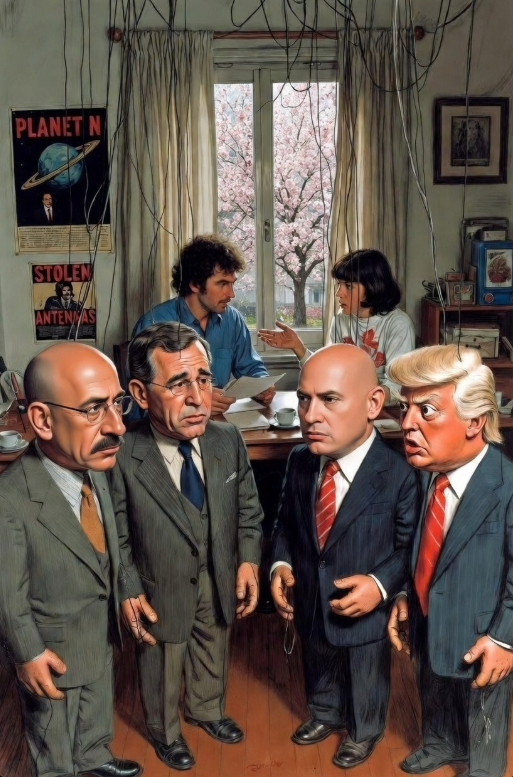
“All the leaders we see now are puppets,” Tzvi said. “Even the leaders of Israel and the United States. They’re no different in that from the leader of Planet N.”
Chapa, who seemed to take it completely naturally that we knew about Planet N — even though we had never discussed it with him — remained silent, the kind of silence that looked like confirmation. Or perhaps it was a proud silence, like that of a teacher whose student has finally understood the material.
At that time the leaders being discussed were Olmert and George W. Bush.
“It’s also true about Bibi and Trump,” Tzvi wrote to me recently on WhatsApp when I reminded him of that conversation.
I was skeptical. I told him that if they are puppets — they are very strong puppets.
“Even today, whoever decides the rulers from the outside can remove them in an instant, the moment they are no longer suitable.”
Chapa formulated the difference between replacing a human leader through human bodies (not by, or not only by, genuine elections) and replacing him or the entire regime by external forces.
Replacing a leader by human bodies can fail, and it usually costs blood — even more so when it comes to replacing an entire regime. That’s what he said, and we see, for example, that the replacement of Khamenei was done by killing him (and so far it hasn’t led to a regime change in Iran). An external replacement is elegant, immediate, bloodless, and — the stronger the regime appeared before — it looks like a miracle. The communist regime in Eastern Europe and the Soviet Union looked like an iron regime that could only be replaced by a world war. Yet it collapsed like a house of cards within a very short time — first in Eastern Europe, then in the Soviet Union. That is exactly how a regime change carried out by outsiders might appear.
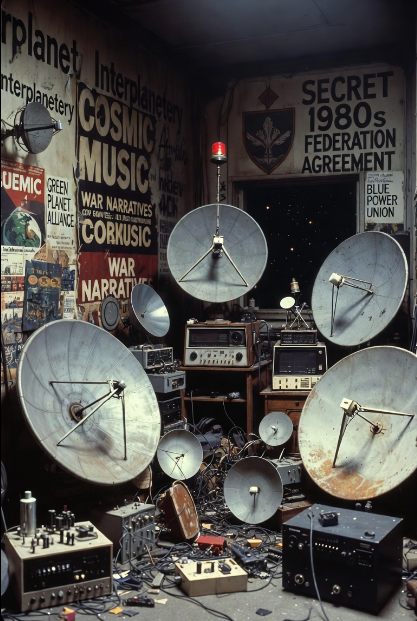
Chapa also claimed that in one of the secret appendices to the “Treaty” signed in the mid-1980s between the Federation and planet Earth, conditions were set under which the communist regime would disappear — exactly as eventually happened a few years later.
Meanwhile, neither the Trump administration nor the Netanyahu administration appears likely to disappear, despite hopes that it would happen in the upcoming elections. The outsiders don’t care how we run our regimes as long as we don’t slide into nuclear danger and risk their holdings in the region. Perhaps after the elections in the Federation — which, according to the strict timetable Chapa gave me back then, are supposed to take place next April — that will change.
 בלוג הצועד The VValker's blog